

2026 Lexus IS MPG & Fuel Economy: EPA Ratings and Range
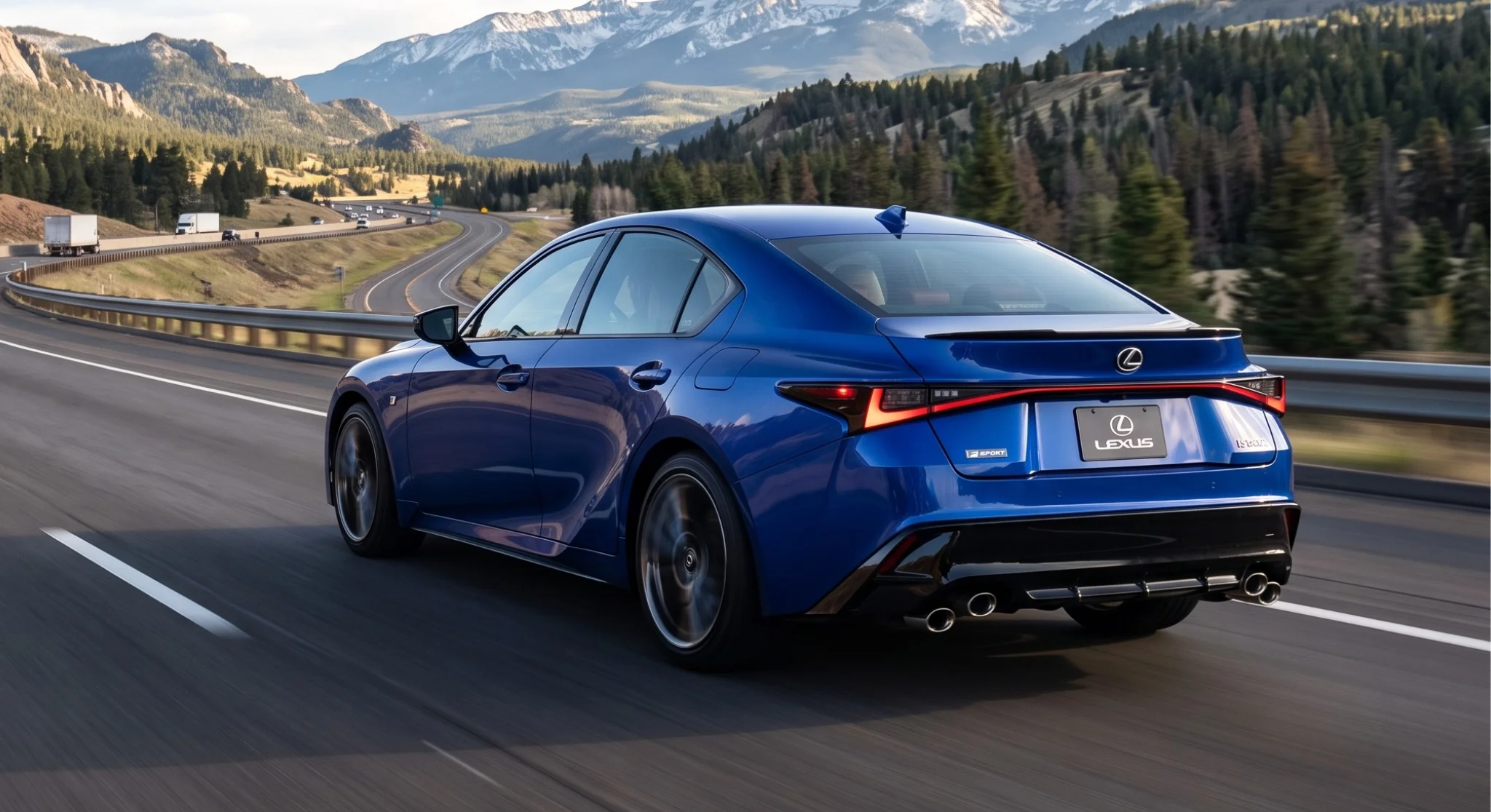
For 2026, the Lexus IS keeps something increasingly rare in the luxury sport sedan segment: a naturally aspirated V6. While most rivals have moved to turbocharged four-cylinders, every 2026 IS is powered by a 3.5-liter V6 producing 311 horsepower and 280 lb-ft of torque. That character comes with an EPA-estimated fuel-economy profile worth understanding before you buy — so here is exactly what the EPA rates the 2026 IS at, how far it travels on a tank, and what it costs to fuel over a year.
2026 Lexus IS EPA Fuel Economy Ratings
The single biggest factor in your IS 350’s EPA-estimated fuel economy is whether you choose rear-wheel drive or all-wheel drive. RWD models use an eight-speed Sport Direct-Shift automatic; AWD models pair the V6 with a six-speed automatic and a rear-biased all-wheel-drive system. Here are the official EPA-Estimated figures for 2026:
| Configuration | EPA-Estimated City | EPA-Estimated Highway | EPA-Estimated Combined |
|---|---|---|---|
| IS 350 RWD (8-speed) | 19 MPG | 27 MPG | 22 MPG |
| IS 350 AWD (6-speed) | 19 MPG | 26 MPG | 22 MPG |
Both configurations return an EPA-Estimated 22 MPG combined; the only difference is a single EPA-estimated highway MPG (27 RWD vs. 26 AWD). The EPA also publishes an estimated annual fuel cost for the IS 350, based on 15,000 miles per year and a 55%/45% city-highway split at the EPA’s reference price for premium fuel. Because the EPA updates that reference price periodically, the dollar figure changes over time; for the current EPA-estimated annual fuel cost, see the official rating for the 2026 Lexus IS 350 at fueleconomy.gov.
EPA-estimated fuel economy figures are for comparison purposes only. Your actual mileage will vary depending on driving conditions, how you drive and maintain your vehicle, battery age/condition, and other factors.
2026 Lexus IS Driving Range: Tank Size and Highway Miles
The 2026 IS carries a 17.4-gallon fuel tank. Combining that capacity with the EPA highway rating gives a realistic sense of how far the IS travels between fill-ups: at an EPA-estimated 27 MPG highway, a rear-wheel-drive IS 350 has an EPA-Estimated highway range of roughly 470 miles on a full tank. Actual range depends on driving conditions, speed, and how the vehicle is maintained.
That tank capacity is also a practical advantage over a key rival. Here is how the IS compares to the BMW 3 Series on fuel capacity:
| Fuel Tank Capacity | 2026 Lexus IS | 2026 BMW 3 Series |
|---|---|---|
| Gallons | 17.4 gallons | 15.6 gallons |
The larger 1.8-gallon capacity helps the naturally aspirated IS offset the efficiency edge of the BMW’s smaller turbocharged four-cylinder, keeping highway range competitive between fill-ups.
Understanding the 2026 Lexus IS Lineup
Lexus simplified the IS family for 2026. The four-cylinder IS 300 and the V8-powered IS 500 have both been discontinued, so every 2026 IS is now an IS 350 built around the same 3.5-liter V6. Because all configurations share one engine, EPA-estimated fuel economy is driven by drivetrain choice (rear-wheel drive vs. all-wheel drive), not by trim. Here is how the 2026 lineup breaks down:
| Configuration | Drivetrain | Transmission |
|---|---|---|
| IS 350 F SPORT Design | RWD or available AWD | 8-speed (RWD) / 6-speed (AWD) |
| IS 350 F SPORT | RWD or available AWD | 8-speed (RWD) / 6-speed (AWD) |
| IS 350 F SPORT with Handling Package | RWD or available AWD | 8-speed (RWD) / 6-speed (AWD) |
| IS 350 F SPORT Special Appearance Package (limited production) | RWD or available AWD | 8-speed (RWD) / 6-speed (AWD) |
Since every configuration uses the same 3.5-liter V6, the EPA ratings above apply across the lineup by drivetrain. You can compare equipment across versions on our 2026 Lexus IS 350 trims and features guide.
2026 Lexus IS Powertrain at a Glance
| Spec | IS 350 RWD | IS 350 AWD |
|---|---|---|
| Engine | 3.5L naturally aspirated V6 | 3.5L naturally aspirated V6 |
| Horsepower | 311 hp | 311 hp |
| Torque | 280 lb-ft | 280 lb-ft |
| Transmission | 8-speed Sport Direct-Shift automatic | 6-speed automatic |
| Fuel required | Premium (91 octane+) | Premium (91 octane+) |
The naturally aspirated V6 trades outright efficiency for smooth, linear power delivery and a distinctive exhaust note — the trade-off that defines the IS against its turbocharged competition. A rear-wheel-drive IS 350 reaches 60 mph in roughly 5.6 seconds.
How to Protect Your 2026 IS 350’s Fuel Economy
A few maintenance habits help the V6 hold its EPA-estimated fuel economy over time:
- Keep tires properly inflated to the door-jamb specification to reduce rolling resistance.
- Replace the engine air filter on schedule so the V6 breathes freely.
- Follow the recommended maintenance intervals (Lexus typically calls for service around every 10,000 miles or 12 months).
- Use the recommended premium fuel to avoid timing-related efficiency losses.
The information in this article is general guidance and does not constitute a specific diagnostic or repair recommendation for any individual vehicle. Repair and maintenance decisions should be made in consultation with a certified technician based on the specific condition of your vehicle.
Why the 2026 IS Requires Premium Fuel
The 3.5-liter V6 is a high-compression engine, and Lexus recommends premium unleaded gasoline with an octane rating of 91 or higher. Running lower-octane fuel can cause the engine’s computer to retard ignition timing to prevent knock, which reduces both power and efficiency. Consistently using the recommended premium fuel lets the engine deliver its rated performance and EPA-estimated MPG. This premium requirement is part of what the EPA factors into its annual fuel-cost estimate.
Common Questions About 2026 Lexus IS Fuel Economy
What is the EPA-Estimated MPG of the 2026 Lexus IS?
The 2026 Lexus IS 350 is EPA-Estimated at 19 MPG city / 27 MPG highway / 22 MPG combined with rear-wheel drive, and an EPA-estimated 19 city / 26 highway / 22 combined with all-wheel drive.
Does the 2026 Lexus IS require premium gas?
Yes. Lexus recommends premium unleaded gasoline with an octane rating of 91 or higher for the 3.5-liter V6. Using lower-octane fuel can reduce performance and efficiency.
How does the all-wheel-drive system affect fuel economy?
The AWD IS 350 uses a rear-biased all-wheel-drive system paired with a six-speed automatic and is EPA-Estimated at 26 MPG highway, one MPG lower than the rear-wheel-drive model’s EPA-estimated 27 MPG highway. City and combined figures are the same at an EPA-estimated 19 and 22 MPG.
Experience the 2026 Lexus IS at Temecula Valley Lexus
With its naturally aspirated V6, refined cabin, updated 12.3-inch touchscreen, and standard Lexus Safety System+ 3.0, the 2026 IS delivers a driving experience that stands apart in the sport sedan segment. To see the current lineup and compare rear-wheel-drive and all-wheel-drive configurations in person, visit us at 42081 DLR Drive, Temecula, CA 92591.
EPA-estimated fuel economy figures are for comparison purposes only. Your actual mileage will vary depending on driving conditions, how you drive and maintain your vehicle, battery age/condition, and other factors.
The information in this article is general guidance and does not constitute a specific diagnostic or repair recommendation for any individual vehicle. Repair and maintenance decisions should be made in consultation with a certified technician based on the specific condition of your vehicle.